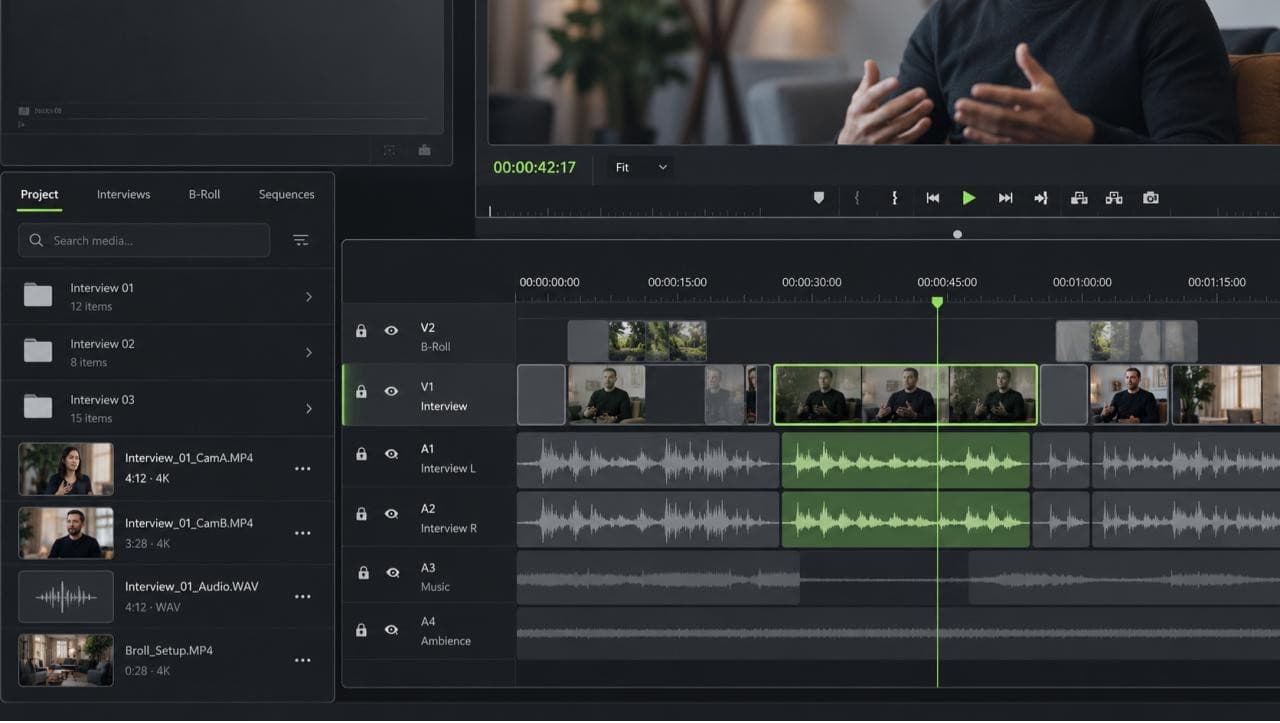
The difficult part of repurposing an old interview is often not editing.
It is finding the passage again.
You remember the guest made a strong point. You do not remember when.
Search for what you want the clip to communicate.
For example:
“the guest explaining why the company nearly ran out of money”
The exact wording in the interview may be different.
Semantic retrieval helps surface candidate Moments based on the meaning of the passage.
Open the original recording at the matching timestamp.
Listen to the full thought.
Then listen before and after it.
The most searchable sentence is not always the best edit.
A good clip may need the setup immediately before the quote or the explanation immediately after it.
Once you know the section you want, choose a clean start and end point.
Remove unnecessary lead-in while preserving enough context for the clip to make sense on its own.
The current Ugle workflow supports previewing retrieved media and working with selected passages as clips for downstream use.
The editor still makes the editorial decision.
Ugle shortens the search.
When repurposing old material, retain the relationship between the excerpt and the original interview.
That makes it easier to re-check wording, date, speaker and context later.
Search should make an archive easier to reuse without separating clips from their provenance.
Your archive already contains material worth using again. Ugle helps you get back to the right Moment.
Share this post