You remember the idea.
You remember who said it.
You might even remember the interview.
What you do not remember is the exact sentence or timestamp.
That is where normal keyword search starts to break down.
If the speaker said, “We had to delay the launch because the suppliers were not ready,” searching for production problem may return nothing. The meaning matches. The words do not.
Keyword search works well when you already know the phrase you are trying to find.
Semantic search solves a different problem. It tries to find passages that are similar in meaning to your query, even when the wording is different.
“supplier delay”
“the part where she explained why the launch was postponed”
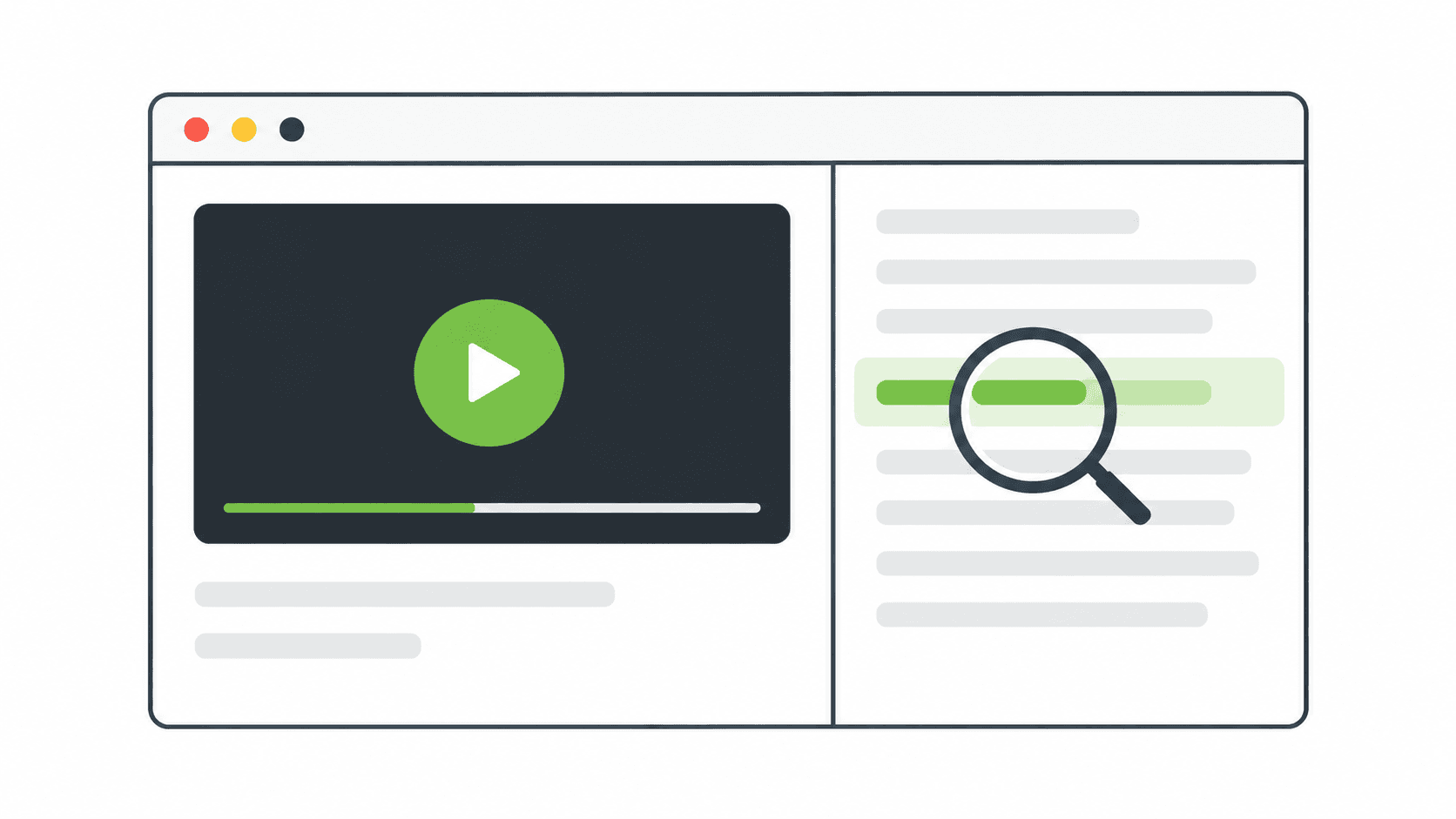
A useful media-search result should then take you back to the relevant recording and timestamp.
The goal is not to generate an answer about the recording.
The goal is to retrieve the source.
Finding a quote manually usually means opening the file, moving through the timeline, listening, rewinding and trying another section.
That may be manageable for one ten-minute recording.
It becomes a different problem when you have dozens or hundreds of interviews.
The recording is not lost. The moment is buried.
Once recordings are indexed, Ugle lets you search across the spoken content of your archive rather than relying on filenames or your memory of exact wording.
Search for what you remember.
Review the matching Moments.
Open the original recording at the relevant timestamp.
Semantic search is retrieval, not proof.
Automatic transcripts can contain errors. Search ranking can also surface passages that are related but not identical to what you intended.
If you plan to publish a direct quotation, play the original recording and confirm the words in context.
That final source check matters.
Ugle is designed to make the route back to that source short.
You should not need to remember the filename, timestamp and exact sentence to find something you already recorded.
Search inside your archive with Ugle.
Share this post