A folder of recordings is storage.
A searchable archive is something you can retrieve knowledge from.
The difference matters once you stop remembering every interview you have recorded.
Search does not replace basic file management.
Use stable folders and sensible filenames.
Preserve original recordings.
Keep project information where your team can understand it later.
A search index should sit on top of a well-managed archive rather than become the only way to understand it.
The next layer is the material inside the files.
Transcription turns speech into searchable text.
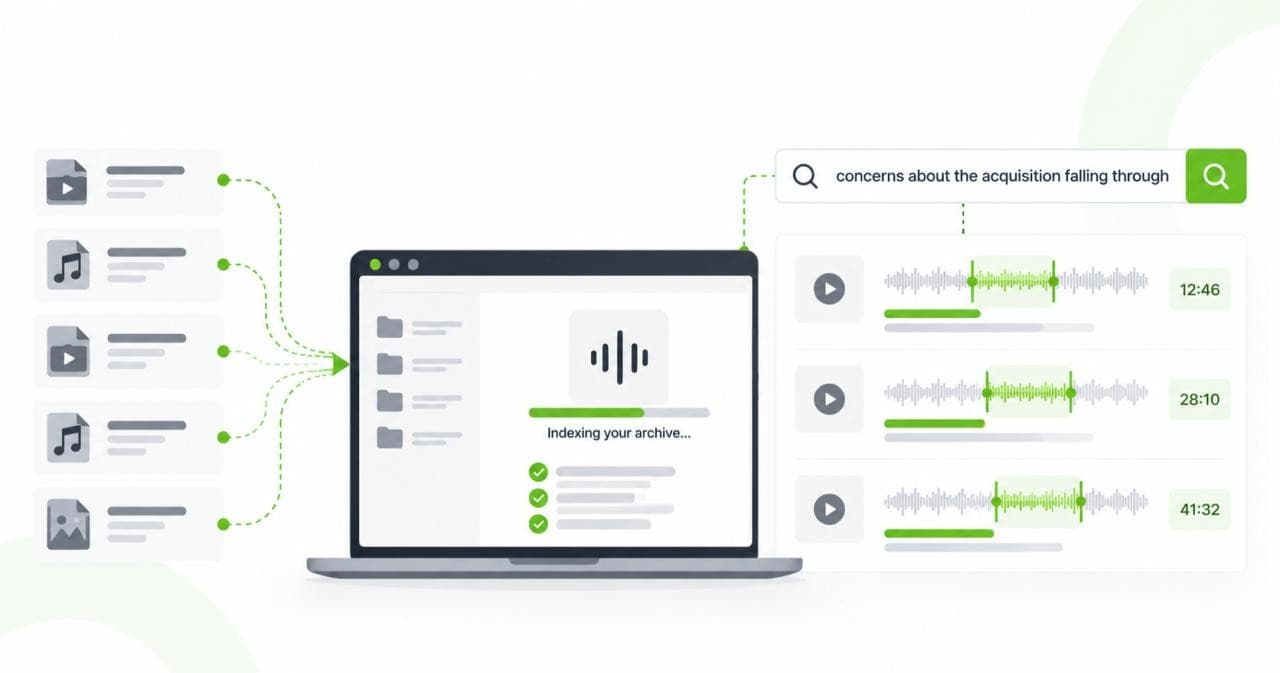
Semantic indexing adds another capability: retrieving passages based on meaning as well as exact wording.
That means you can search:
“concerns about the acquisition falling through”
without needing to remember the precise phrase the interviewee used.
The important shift happens when retrieval stops being file-by-file.
You are no longer asking:
“Which interview should I open?”
You are asking:
“Where in my archive was this discussed?”
The result should identify relevant source recordings and the timestamps where those passages occur.
A transcript is an index into the recording.
It is not automatically the final evidence.
When you find a quotation, claim or important passage, return to the source recording.
Listen before publishing.
Check the words around it.
Confirm the speaker.
This keeps search fast without weakening editorial standards.
A good interview has value beyond the story for which it was recorded.
Months later, it may contain background, historical context, a prediction or a quote that becomes relevant again.
Searchability changes the lifespan of recorded material.
The archive becomes something you can ask questions of without giving up the original source.
Build a searchable local media archive with Ugle.
Share this post